
Notice: Function _load_textdomain_just_in_time was called incorrectly. Translation loading for the modern-events-calendar-lite domain was triggered too early. This is usually an indicator for some code in the plugin or theme running too early. Translations should be loaded at the init action or later. Please see Debugging in WordPress for more information. (This message was added in version 6.7.0.) in /home/woimtgco/public_html/westmidlands/wp-includes/functions.php on line 6170
Uncategorized - What's On In The West Midlands

Group A Strep – What you need to know

Group A streptococcus (GAS), also referred to as Strep A is a common bacterium. Lots of us carry it in our throats and on our skin and it doesn’t always result in illness. However, GAS does cause a number of infections, some mild and some more serious.

The most serious infections linked to GAS come from invasive group A strep, known as iGAS.

These infections are caused by the bacteria getting into parts of the body where it is not normally found, such as the lungs or bloodstream. In rare cases an iGAS infection can be fatal.

Whilst iGAS infections are still uncommon, there has been an increase in cases this year, particularly in children under 10 and sadly, a small number of deaths.

This blog explains more about GAS and the infections it can cause, as well as how it is spread and what to look out for when your child is unwell.

How is it spread?

GAS is spread by close contact with an infected person and can be passed on through coughs and sneezes or from a wound.

Some people can have the bacteria present in their body without feeling unwell or showing any symptoms of infections and while they can pass it on, the risk of spread is much greater when a person is unwell.

Which infections does GAS cause?

GAS causes infections in the skin, soft tissue and respiratory tract. It’s responsible for infections such as tonsillitis, pharyngitis, scarlet fever, impetigo and cellulitis among others.

While infections like these can be unpleasant, they rarely become serious. When treated with antibiotics, an unwell person with a mild illness like tonsilitis stops being contagious around 24 hours after starting their medication.

We are currently seeing high numbers of scarlet fever cases.

The first signs of scarlet fever can be flu-like symptoms, including a high temperature, a sore throat and swollen neck glands (a large lump on the side of your neck).

A rash appears 12 to 48 hours later. It looks looks like small, raised bumps and starts on the chest and tummy, then spreads. The rash makes your skin feel rough, like sandpaper. The rash will be less visible on darker skin but will still feel like sandpaper. More information on scarlet fever can be found on the NHS website, including photos.

What is invasive group A strep?

The most serious infections linked to GAS come from invasive group A strep, known as iGAS.

This can happen when a person has sores or open wounds that allow the bacteria to get into the tissue, breaches in their respiratory tract after a viral illness, or in a person who has a health condition that decreases their immunity to infection. When the immune system is compromised, a person is more vulnerable to invasive disease.

Which infections does invasive group A strep cause?

Necrotising fasciitis, necrotising pneumonia and Streptococcal Toxic Shock Syndrome are some of the most severe but rare forms of invasive group A strep.

What is being done to investigate the rise in cases in children?

Investigations are underway following reports of an increase in lower respiratory tract Group A Strep infections in children over the past few weeks, which have caused severe illness.

Currently, there is no evidence that a new strain is circulating. The increase is most likely related to high amounts of circulating bacteria.

It isn’t possible to say for certain what is causing higher than usual rates of these infections. There is likely a combination of factors, including increased social mixing compared to the previous years as well as increases in other respiratory viruses.

What should parents look out for?

It’s always concerning when a child is unwell. GAS infections cause various symptoms such as sore throat, fever, chills and muscle aches.

As a parent, if you feel that your child seems seriously unwell, you should trust your own judgement.

CONTACT NHS 111 OR YOUR GP IF:

  • your child is getting worse
  • your child is feeding or eating much less than normal
  • your child has had a dry nappy for 12 hours or more or shows other signs of dehydration
  • your baby is under 3 months and has a temperature of 38C, or is 3 to 6 months and has a temperature of 39C or higher
  • your baby feels hotter than usual when you touch their back or chest, or feels sweaty
  • your child is very tired or irritable

CALL 999 OR GO TO A&E IF:

  • your child is having difficulty breathing – you may notice grunting noises or their tummy sucking under their ribs
  • there are pauses when your child breathes
  • your child’s skin, tongue or lips are blue
  • your child is floppy and will not wake up or stay awake

What are schools being asked to do?

Schools are being asked to follow the usual outbreak management processes as set out in our guidance if an outbreak of scarlet fever is identified. An ‘outbreak’ is defined as 2 or more probable or confirmed cases attending the same school, nursery or other childcare setting within 10 days of each other.

Schools and nurseries should contact their local Health Protection Team if:

  • You have one or more cases of chickenpox or flu in the class that has scarlet fever at the same time. This is because infection with scarlet fever and either chickenpox or flu at the same time can result in more serious illness.
  • You are experiencing an outbreak of scarlet fever in a setting or class that provides care or education to children who are clinically vulnerable.
  • The outbreak continues for over 2 weeks, despite taking steps to control it.
  • Any child or staff member is admitted to hospital with any Group A Strep (GAS) infection (or there is a death).

Schools where outbreaks occur are additionally advised to:

  • Make sure that all children and employees that are ill go home and don’t return until they are well.
  • Tell parents and visitors about the cases of illness.
  • Remind employees to wash their hands throughout the day. Hand washing needs to be done after changing nappies and helping children use the toilet.
  • Make sure that all cuts, scrapes and wounds are cleaned and covered. This also applies to bites.
  • Carry out regular cleaning throughout the day, especially hand contact surfaces – this is covered in Managing Outbreaks and Incidents. Advice may also be given to increase cleaning of areas with particular attention to hand touch surfaces that can be easily contaminated such as door handles, toilet flushes and taps and communal touch areas. These should ideally be cleaned using a disinfectant.
  • Consider stopping messy play, removing hard to clean soft toys, not going on visits outside of your setting and not allowing children to share drinks
  • Once cases have stopped (no new cases or illness for 10 days), do a full cleaning of buildings (including toys, carpets etc)

Who needs to take antibiotics?

Antibiotics are not routinely recommended as a preventative treatment and should only be taken in confirmed cases of scarlet fever or another GAS infection, or in certain circumstances where Health Protection Teams recommend their wider use.

If there are cases identified in a child’s class, any child showing symptoms should be assessed by a doctor/by their GP and will be prescribed antibiotics if needed. Children are not infectious after 24 hours on treatment and can return to school once they’re feeling well enough after this period.

Are children with chickenpox more vulnerable to iGas?

Children who have had chickenpox recently are more likely to develop serious forms of Group A Strep infection, although this remains very uncommon. The chickenpox rash can make it easier for Group A Strep to get into the body, which can lead to invasive infection. If a child has chickenpox – or has had it in the last 2 weeks – parents should remain vigilant for symptoms such as a persistent high fever, cellulitis (skin infection) and arthritis (joint pain and swelling). If you are concerned for any reason please seek medical assistance immediately.

How can we stop infections from spreading?

Good hand and respiratory hygiene are important for stopping the spread of many bugs. By teaching your child how to wash their hands properly with soap and warm water for 20 seconds, using a tissue to catch coughs and sneezes, and keeping away from others when feeling unwell, they will be able to reduce the risk of picking up, or spreading, infections.


All information in this blog is from UK Health Security Agency and is used under the Open Government Licence v3.0
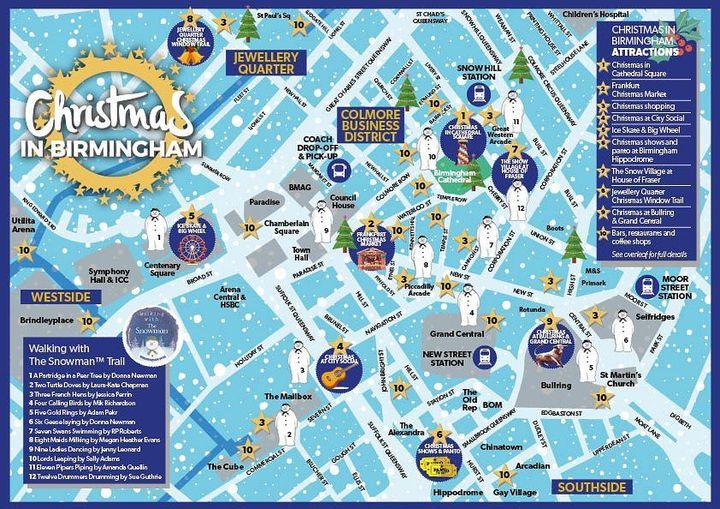
Christmas In Birmingham

Birmingham is ready to be unwrapped this Christmas, with a host of festive events all within walking distance from each other.
From Christmas markets full of crafts, gifts, food and drink, to Ice Rinks, shopping and festive trails, the city is fit to bursting with fun for all ages.
Birmingham’s Christmas season starts on November 4 2021 and runs until January 4 2022. With over 8 weeks of fun, there’s plenty of time to see everything.
For more information, visit https://visitbirmingham.com/christmas

Cannock’s McArthurGlen designer outlet ready to open on 12th April

The final preparations are underway for the opening of the £160 million designer outlet at Mill Green, which will be welcoming customers from 10am on the first day that non-essential shops are allowed to reopen.

There will be no grand opening or ribbon cutting due to the pandemic, which has already delayed the centre opening by a year, but a raft of heavyweight brands will be ready to welcome shoppers from across the West Midlands.

Visitor numbers are being limited to encourage social distancing, meaning a maximum of 2,100 customers will be allowed in the centre at one time.

Centre manager Mike Thomas said: “Our new centre brings together some of the world’s most sought-after brands across the fashion, lifestyle and food and beverage sectors.

“When we officially open the doors to customers next week, they can enjoy a host of premium designer labels, including Ted Baker, Lacoste and Tommy Hilfiger. “They can also expect a fantastic mix of much-loved brands, such as Beauty Outlet, Superdry and Yankee Candle.

“We have an exceptional line-up of sportswear and athleisure brands that features Adidas, Under Armour and Skechers, while rounding off our first collection of F&B operators is Starbucks and Five Guys.

“Customers can look forward to more exciting arrivals in the coming weeks, including the highly-anticipated openings of Nike, Asics, Wagamama and The Cosmetics Company.”

But due to the coronavirus pandemic no opening day special discounts will be offered, and all events planned for open spaces have been cancelled this year.

Mr Thomas added: “While we will be unable to host any events this year due to our health and safety measures, in the future we will certainly use our piazza and other public spaces to host many memorable guest events as we do at our centres throughout the UK and Europe.

“To make sure we protect the health and wellbeing of all our customers we won’t be offering any special opening day discounts but as with all McArthurGlen designer outlets, there will be year-round savings of up to 60 per cent and we will regularly host additional promotions and events when the time is right. Customers should also often check our Facebook and Instagram pages for any special giveaways we are running.”

West Midlands to get world’s first airport for electric flying taxis and autonomous delivery drones

Coventry City Council and the UK Government are also supporting the world first, which will be located next to the city’s Ricoh Arena

The world’s first mobile airport for flying cars and autonomous delivery drones has won government backing and will be launched in Coventry later this year, it has been announced.

Air-One has been designed to transform urban transport – allowing air taxis and electric drones to land and recharge, helping to reduce congestion, cut air pollution, and contribute to a zero-carbon future.

The zero-emission airport, designed by Urban Air Port, can be installed in a matter of days and has been backed by Hyundai Motor Group which plans to have commercialised its own flying vehicles by 2028.

Coventry City Council and the UK Government are also supporting the world first, which will be located next to the city’s Ricoh Arena.

Air-One has been developed for the forthcoming ‘urban air mobility’ revolution which is estimated to be worth almost £1 trillion over the next 20 years as companies and authorities invest in Vertical Take-Off and Landing (eVTOL) aircraft and the infrastructure it requires.

It can be operated off-grid and can also be integrated with electric vehicles and sustainable public transport.

Pamela Cohn, chief operating officer for the Urban Air Mobility Division of Hyundai Motor Group, said: “As we advance our eVTOL aircraft programme, development of supporting infrastructure is imperative.

“Air-One is a unique project that is set to help lead the way in developing a robust, accessible and intermodal infrastructure network for future mobility.

“We are excited to be part of this partnership in the UK and look forward to working together to create community impact and opportunity through safe, affordable, and human-centred mobility solutions.”

The airport – which is around 60 per cent smaller than a heliport – will be the first of more than 200 zero emission sites Urban Air Port plans to install worldwide over the next five years in response to global demand.

Initially, it will be used to help the public understand the new technology, with Malloy Aeronautics, a UK-based drone developer, demonstrating the use of large cargo drones at the site.

Its design allows the airport to be easily dismantled and moved to alternative sites, as the air-mobility sector develops.

Alongside urban environments, the design has been developed with disaster emergency management in mind.

They can rapidly deploy drones and other eVTOL to collect and transport emergency supplies, equipment and people where needed.

Ricky Sandhu, founder and executive chairman of Urban Air Port, said: “Cars need roads. Trains need rails. Planes need airports. eVTOLs will need Urban Air Ports.

“Over a hundred years ago, the world’s first commercial flight took off, creating the modern connected world.

“Urban Air Port will improve connectivity across our cities, boost productivity and help the UK to take the lead in a whole new clean global economy

Latest coronavirus rate for each part of Birmingham and West Midlands with six areas in England top 20

Of the 315 local areas in England, 18 (6%) have seen a rise in case rates and 297 (94%) have seen a fall

Wednesday’s update of the latest Covid-19 case rates for every local authority area in England has been released as the country faces coronavirus lockdown until March.

The coronavirus figures, for the seven days to January 23, are based on tests carried out in laboratories (pillar one of the Government’s testing programme) and in the wider community (pillar two).

The rate is expressed as the number of new cases per 100,000 people.

Data for the most recent four days (January 24-27) has been excluded as it is incomplete and does not reflect the true number of cases.

Of the 315 local areas in England, 18 (6%) have seen a rise in case rates and 297 (94%) have seen a fall.

Sandwell in the West Midlands has the second highest rate, down from 930.4 to 781.5, with 2,567 new cases. Wolverhampton is fourth with 696 per 100,000 people.


Walsall, Redditch, Dudley and Birmingham are also in the top 20.


The 10 areas with the biggest week-on-week rise in rates include North Warwickshire in sixth (403.0 to 435.2).

The list has been calculated by the PA news agency based on Public Health England data published on January 27 on the Government’s coronavirus dashboard.

Here is the list in full. From left to right, it reads: name of local authority; rate of new cases in the seven days to January 23; number (in brackets) of new cases recorded in the seven days to January 23; rate of new cases in the seven days to January 16; number (in brackets) of new cases recorded in the seven days to January 16.

TOP 10

Knowsley, 822.6, (1241), 1102.3, (1663)

Sandwell, 781.5, (2567), 930.4, (3056)

Slough, 714.9, (1069), 1022.5, (1529)

Wolverhampton, 696.8, (1835), 886.2, (2334)

St. Helens, 667.3, (1205), 824.0, (1488)

Brent, 664.7, (2192), 916.1, (3021)

Ealing, 663.5, (2268), 896.1, (3063)

Walsall, 655.0, (1870), 737.4, (2105)

Hounslow, 650.0, (1765), 931.0, (2528)

Rushmoor, 622.6, (589), 862.6, (816)

Rest of West Midlands

Birmingham, 577.9, (6598), 712.4, (8134)

Worcester, 467.3, (473), 684.6, (693)

Cannock Chase, 437.7, (441), 537.9, (542)

Coventry, 435.2, (1617), 517.1, (1921)

North Warwickshire, 435.2, (284), 403.0, (263)

Solihull, 428.0, (926), 525.5, (1137)

Telford and Wrekin, 420.9, (757), 499.3, (898)

Tamworth, 415.9, (319), 474.6, (364)

East Staffordshire, 403.3, (483), 529.4, (634)

Wychavon, 373.2, (483), 510.7, (661)

Nuneaton and Bedworth, 362.6, (471), 418.8, (544)

Bromsgrove, 361.4, (361), 558.7, (558)

Rugby, 332.3, (362), 405.7, (442)

Stoke-on-Trent, 321.0, (823), 386.2, (990)

Wyre Forest, 315.9, (320), 392.9, (398)

Stafford, 305.2, (419), 389.7, (535)

Shropshire, 302.7, (978), 440.1, (1422)

Malvern Hills, 260.5, (205), 344.4, (271)

Newcastle-under-Lyme, 250.3, (324), 305.2, (395)

Warwick, 239.3, (344), 292.9, (421)

Staffordshire Moorlands, 207.2, (204), 254.0, (250)

Stratford-on-Avon, 185.2, (241), 285.9, (372)


Notice: ob_end_flush(): failed to send buffer of zlib output compression (0) in /home/woimtgco/public_html/westmidlands/wp-includes/functions.php on line 5493